
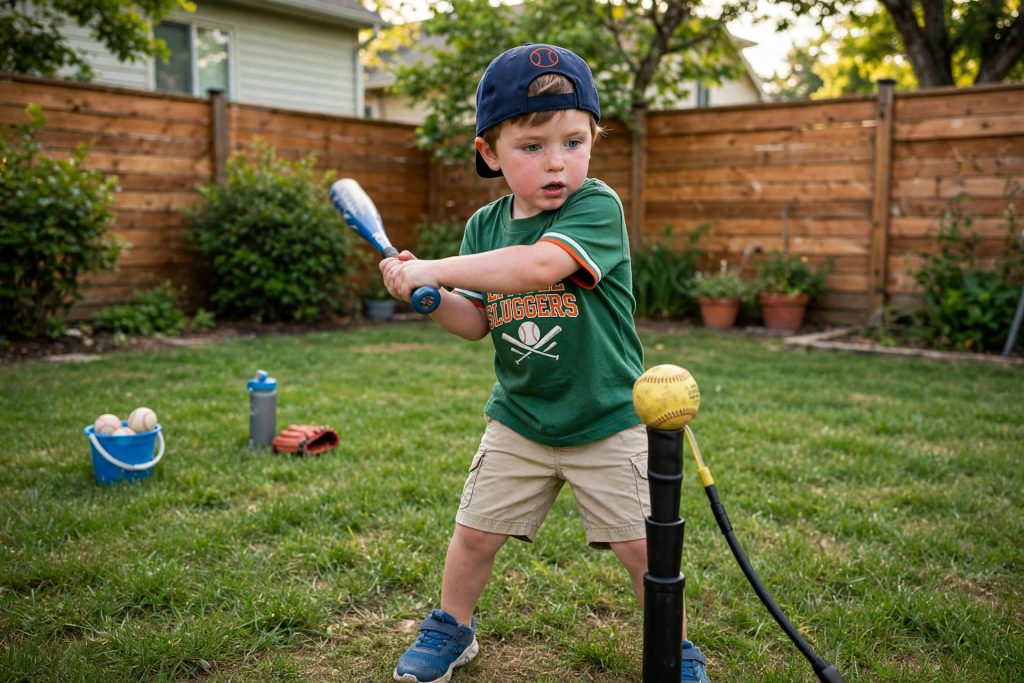
If you’ve spent a season watching a five-year-old chase a ball in the wrong direction and call it the best day ever, you already know: the best gifts for a young ballplayer aren’t always the fanciest things in the catalog. They’re the things that actually get used — at practice, at home and in the backyard.
This is the list I’d hand a grandparent, an aunt, or a team mom who asked, “What does he actually need?” Pick one, pick a few, and you’re done! (Here’s a pro tip… if you’re buying for someone else’s kid, stick to the no-sizing-needed stuff — practice balls or a glow ball never need a gift receipt!)
- A first tee-ball bat (the big gift for the littlest players)
Example pick: Franklin Venom tee-ball bat (budget-friendly, USA Baseball approved); Marucci F5 tee-ball bat; Louisville Slugger Meta tee-ball bat.
Around: $30–$70
Why it works: a bat that is actually his size is the difference between a swing that connects and a swing that drags on the ground. Look for the USA Baseball stamp — most tee-ball and youth leagues require it — and go light: a -12 or -13 drop weight is right for tee ball, and a shorter, lighter bat builds confidence faster than a big one ever will. If you’re not sure on size, hold the bat out straight with one hand — if he can’t hold it level for a few seconds, it’s too heavy.
- A batting helmet with a face guard
Example pick: Rawlings Coolflo tee-ball batting helmet; Rawlings Coolflo Max youth helmet with facemask.
Around: $30–$55
Why it works: face guards are required in most youth leagues through about age 12, and a helmet that fits is the one he’ll actually keep on. Look for one that’s pre-drilled for a face guard (or comes with one already attached) and sized for youth heads — one-size youth helmets fit most kids 5–12. In a team color, it’s also the easiest way to spot your kid in a dugout full of helmets.
- A first fielding glove
Example pick: a youth fielding glove, like the Rawlings Players Series — soft, game-ready leather that doesn’t need months of breaking in.
Around: $25–$50
Why it works: a stiff, grown-up glove is the fastest way to make a little kid hate catching. A youth glove is smaller, softer, and closes easier — which means more catches, fewer tears, and a kid who actually wants to play catch in the yard. Size it by age, not by position: tee ball and coach pitch kids just need a glove that fits their hand and closes when they squeeze.
- Batting gloves they’ll actually wear
Example pick: Franklin Sports youth batting gloves; Under Armour youth batting gloves.
Around: $15–$25
Why it works: blisters are the fastest way to ruin a good at-bat, even a tee-ball at-bat. A glove that fits is the difference between “I love these” and “these are in the bottom of my bag forever.” Look for a snug fit with a little stretch, not loose and floppy. Measure the hand if you can — age alone is a terrible way to guess a glove size.
- Molded cleats (not metal!)
Example pick: youth molded baseball cleats — New Balance, Under Armour, or Adidas youth molded.
Around: $25–$40
Why it works: little kids need grip, not spikes. Molded cleats give them traction on dirt and grass without the sharp metal — and metal isn’t allowed in youth leagues anyway, so molded is the only call here. If you know his size in regular shoes, you’re safe. (And buy them a little roomy — kids’ feet grow between the first practice and the last game, every single season.)
- An adjustable batting tee
Example pick: Tanner batting tee (adjustable, sturdy); Champion Sports Deluxe batting tee (budget-friendly).
Around: $25–$45 for a good adjustable tee
Why it works: tee work is how good swings are built, and it starts here — in the backyard, at kid height, on a random Tuesday. A sturdy, adjustable tee grows with him from tee ball to coach pitch, and it folds up small enough to live in the trunk next to the bat bag. Skip the wobbly dollar-store version; a tee that falls over mid-swing makes practice feel like a punishment.
- A pop-up tee trainer for solo practice (the fun one)
Example pick: Franklin Sports MLB Micro Tee Trainer (pop-up pitching machine with mini balls, drill card, and bag).
Around: $30–$65
Why it works: it pops a ball up on a delay, so a kid can practice timing and hand-eye coordination without a pitcher. No batteries, no partner needed, and it’s genuinely fun — which, for a 7-year-old, matters more than any drill chart ever will. This is the gift that gets played with the afternoon it arrives.
- A small bat bag or backpack
Example pick: a youth bat backpack — room for one bat, a glove, a helmet, and a water bottle.
Around: $30–$50
Why it works: little kids have little gear, and a full-size equipment bag swallows them whole. A youth backpack fits their stuff, fits their back, and has a fence hook so it hangs in the dugout instead of living in the dirt. Look for a separate shoe pocket — cleats go in the bag, not in the car, and everybody’s nose will thank you.
- Practice balls (the gift that never stops getting used)
Example pick: a bucket of soft tee balls or foam practice balls — safe for the backyard and the living room.
Around: $10–$20
Why it works: you can never have too many balls. They go over fences, under cars, into the neighbor’s yard — and every lost ball is a practice session that ends early. A bucket of soft balls means practice keeps going, and foam balls mean the windows stay safe. This is the easiest stocking stuffer on this whole list, and the one that gets used the very next day.
- The fun, non-gear gifts (especially for the youngest players)
Example picks: a starter pack of baseball cards, a glow-in-the-dark / LED baseball for evening backyard games, a baseball fleece blanket, a team-color water bottle.
Around: $15–$40
Why it works: not every gift has to improve a swing. Sometimes the best gift is the one that makes baseball feel fun at home, after practice is over. Cards are great for trading with teammates, a glow ball turns a regular backyard into a night game, and a blanket in team colors is the one that goes to every cold spring game.
- A tee-ball set with a tether (no chasing the ball)
Example pick: Franklin Sports Kids Tee Ball Starter Set — youth bat, batting tee, and a tee ball attached to the tee with a bungee cord.
Around: $25–$35
Why it works: the ball is tethered to the tee, so after every swing it snaps right back instead of rolling under the fence — a little kid can practice in the backyard all by himself without a parent chasing balls after every hit. It’s the whole starter kit in one box, which makes it a great first-baseball gift for the youngest players. One heads-up: the bungee cord means adult supervision for the littlest ones.
- A batting practice net for the backyard
Example pick: GoSports 6 x 6 ft Youth Baseball & Softball Net (bow frame, carry bag, strike zone included); Franklin Sports MLB 7’x7’ Flexpro Net.
Around: $40–$65
Why it works: a net turns the backyard into a batting cage. Hit off the tee or soft-toss right into it — no chasing balls, no worrying about the neighbor’s windows. The youth-size 6×6 sets up in about 90 seconds and folds into a carry bag, so it lives in the garage instead of taking over the yard. It pairs perfectly with the adjustable tee (#6) and the practice balls (#9), and it’s the gift that makes all the other gear get used more.
Quick pick, by budget
- Under $25: batting gloves, practice balls, baseball cards, glow ball
- $25–$50: tee-ball bat (low end), batting helmet, first glove, molded cleats, adjustable tee, small bat bag, tethered tee-ball set, batting practice net (low end)
- Over $50 / the big gift: tee-ball bat (higher end), pop-up tee trainer, helmet + glove combo, batting practice net
That’s it — no overthinking. If it fits in the bag, survives the season, and makes practice a little easier (or a little more fun), it’s a win. And if you’re the one doing the laundry and the driving and the snack run? Put something on this list for yourself, too. You earned it.